
A fridge leaking water on your kitchen floor almost always traces back to one of five things: a frozen or blocked defrost drain, a full or cracked drain pan, a clogged or kinked water line, a door that will not seal, or a unit that is not sitting level. None of them are a mystery once you know where to look. If the puddle keeps coming back or you find water pooling under the crisper drawers, our team that handles refrigerator repair across Winnipeg can sort it fast.
Winnipeg homes add a wrinkle. Our swings from humid summers to deep winter dry spells push a fridge’s defrost cycle harder than most climates, and a drain that ices over in January behaves very differently than one that just needs a rinse. Here is how to read the puddle and figure out which of the five causes you are dealing with.
In This Article
The Quick Answer for a Leaking Fridge
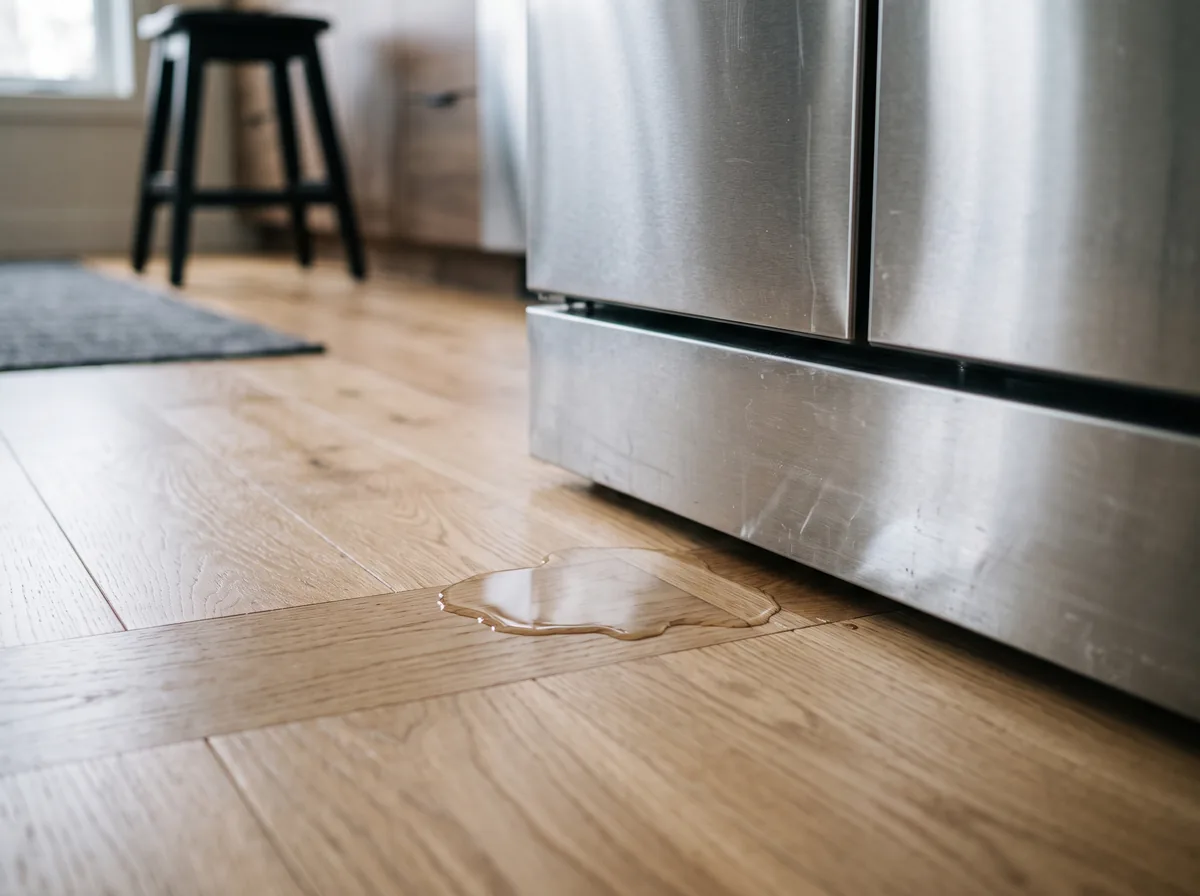
Water on the floor is a symptom, not the problem. The fridge is not making new water out of nowhere. It is mishandling water it already has, either the condensation your fridge sheds during its normal defrost cycle or the supply line feeding an ice maker or dispenser. Trace the puddle to its source and the cause usually names itself.
Water at the front, near the door? Look at the seal and how level the unit sits. Water underneath, toward the back? Suspect the defrost drain or the drain pan. Water inside, pooling under the crisper drawers? That is the classic frozen defrost drain. The location of the leak is your first and best clue.
Quick Take
Most refrigerator leaks come from a clogged or frozen defrost drain or a door that no longer seals, not from a serious mechanical failure. Find where the water sits first, then match it to one of the five causes below.
5 Common Causes of a Fridge Leaking Water
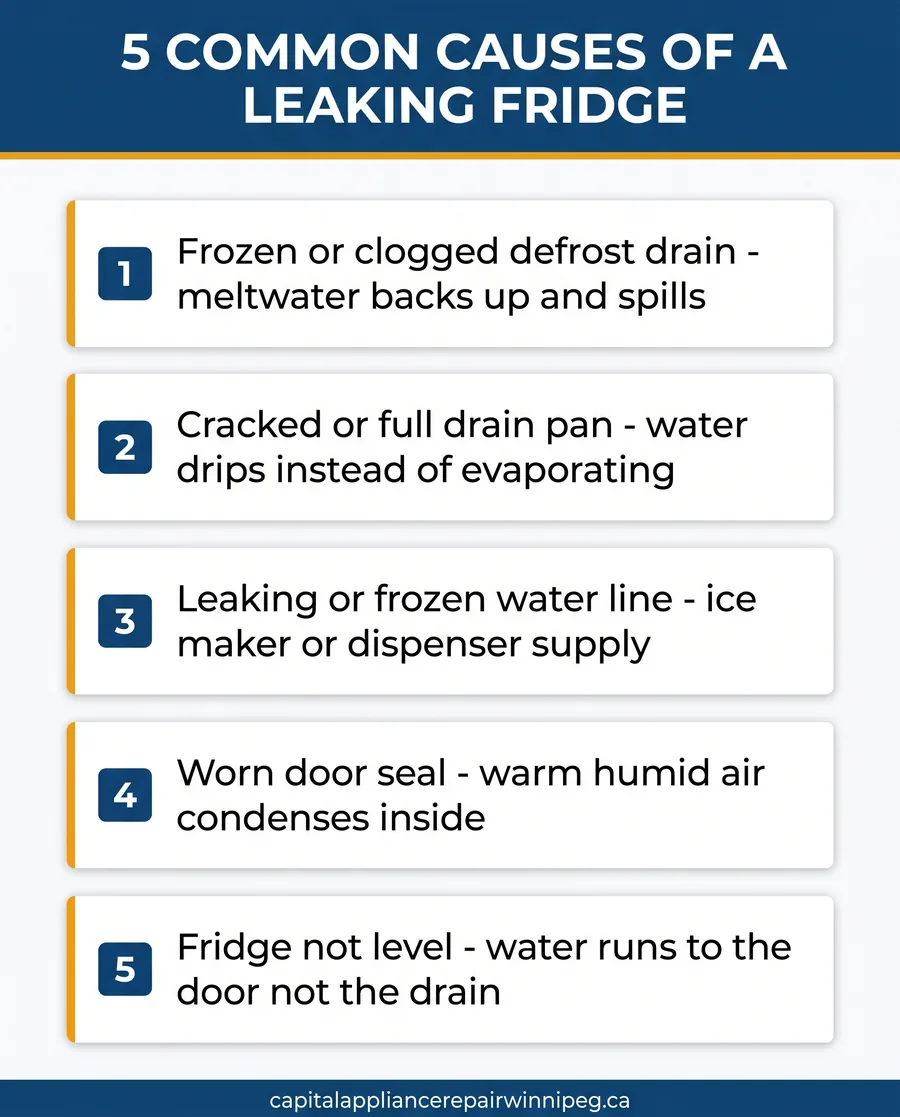
Ninety percent of the leaks we see in Winnipeg kitchens land on this list. Work through them in order, and you will usually find the culprit before you get to number five.
- Frozen or Clogged Defrost Drain: As your fridge defrosts, meltwater is supposed to run down a small drain to the pan below. Food debris or ice can plug that drain, so the water backs up and spills inside, then out onto the floor. This is the single most common cause.
- Full, Cracked, or Misaligned Drain Pan: Meltwater collects in a shallow pan under the fridge and evaporates. If the pan is cracked, overflowing, or knocked out of position, water drips onto the floor instead.
- Clogged, Frozen, or Kinked Water Line: Fridges with an ice maker or water dispenser run on a supply line. A cracked line, a loose fitting, or a line that froze at the inlet valve will leak, sometimes a slow drip you only notice as a spreading stain.
- A Door That Will Not Seal: A worn or dirty gasket lets warm, humid room air sneak in. That extra moisture condenses inside, overwhelms the drain, and shows up as water at the front of the unit. This is often what causes condensation inside your fridge in the first place.
- A Fridge That Is Not Level: If the unit tilts forward, water in the defrost system runs toward the door instead of the drain. A slightly out-of-level fridge is a surprisingly frequent cause of a front-of-unit puddle.
Did You Know?
A refrigerator is designed to shed condensation constantly. A cup or two of water moving through the defrost drain every day is completely normal. The problem starts only when that water cannot reach the pan, which is why a blocked drain is behind so many leaks.
What to Check First, In Order
Before you pull the fridge out or call anyone, run this quick check. It takes about ten minutes and tells you which of the five causes you are chasing.
- Where the Water Sits: Front, back, or inside under the crisper, this alone narrows it to two or three causes.
- The Door Gasket: Close the door on a dollar bill or slip of paper. If it slides out with no resistance, the seal is worn.
- The Floor Level: Set a small level on top of the fridge, front to back. A forward tilt sends water to the wrong place.
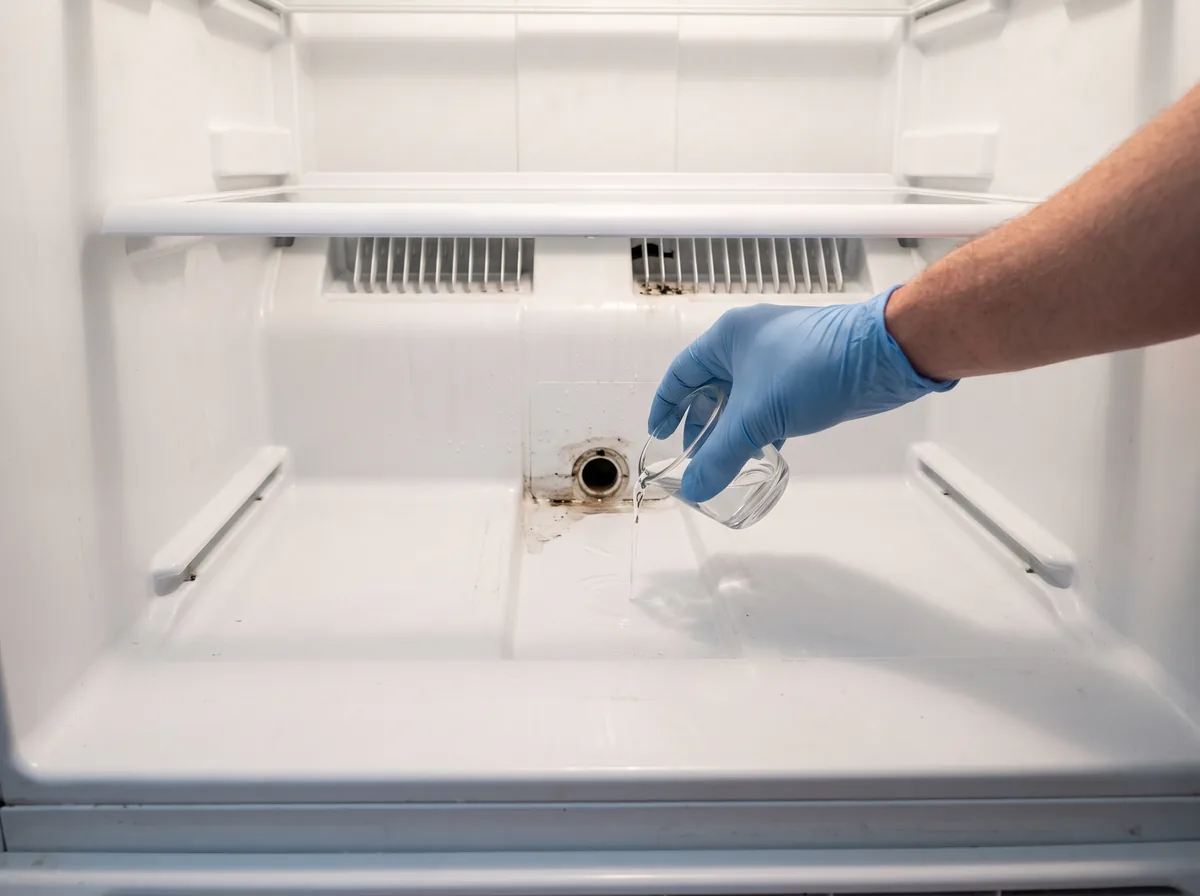
- Inside the Fridge Under the Drawers: Ice or a shallow pool there points straight at a frozen defrost drain.
- The Water Line: If you have an ice maker or dispenser, look for a slow drip, a stain, or frost at the connection behind the unit.
- The Drain Pan Underneath: Slide it out if you can reach it. A cracked or overflowing pan is easy to spot.
People Often Ask: Is a Leaking Fridge an Emergency?
Usually not, but do not ignore it. Standing water damages flooring and cabinets, and a chronically wet floor is a slip hazard. If the leak is from the water supply line rather than condensation, shut off the fridge’s water valve and clean up the spill, then book a repair so it does not soak your subfloor.
Why Winnipeg Winters Make It Worse
In a Winnipeg winter, indoor air runs dry while the fridge keeps cycling, and the defrost drain sits closer to freezing than it would in a warmer climate. That combination lets the drain tube ice over completely. You thaw it, it works for a week, then it freezes again. A repeat freeze usually means the drain heater or a small check valve has failed, not that you did the thaw wrong.
Hard water is the other local factor. Winnipeg’s water leaves mineral scale that slowly narrows the fridge’s water line and inlet valve, which turns a small drip into a steady leak over a season or two. If you also notice no water coming from your fridge dispenser, the same mineral buildup is often behind both problems. If your fridge is more than a decade old and leaks are becoming a yearly event, it can be worth comparing repair against a newer model, since the ENERGY STAR refrigerator guidelines and the ENERGY STAR Canada program show how much less energy and water a current unit uses.
Red Flag: Water Plus Electrical
If you ever see water near the fridge’s power cord, an outlet, or the compressor at the back, stop. Do not mop around a live connection. Unplug the fridge at the wall if you can reach the plug safely, keep the area dry, and call a technician. Water and electricity together is the one part of this you should never troubleshoot yourself.
Repair Costs and When to Call a Technician
A clear defrost drain is a rinse and a bit of patience. A failed inlet valve or a hairline crack in the water line is a parts-and-labour job. The ranges below are typical Winnipeg figures to help you budget, not a quote for your exact unit.
| Cause | DIY or Technician? | Typical Repair Cost | Time to Fix |
|---|---|---|---|
| Frozen or clogged defrost drain | Often DIY, technician if it refreezes | $0 to $180 | 30 min to 1 hour |
| Cracked or overflowing drain pan | DIY to reseat, technician to replace | $50 to $200 | 30 min to 1 hour |
| Leaking or frozen water line | Technician recommended | $120 to $280 | 1 to 2 hours |
| Worn door gasket | DIY or technician | $100 to $250 | 1 hour |
| Fridge out of level | DIY, just adjust the feet | $0 | 10 minutes |
Pricing note: These are typical 2026 Winnipeg ranges for the repair itself and can vary by brand, model, part availability, and how the fridge is built in. They are planning figures, not a quote. Ask for a written estimate before any parts are ordered.
Save Your Money
Before you replace anything, thaw the defrost drain and clean the door gasket with warm soapy water. Those two free fixes clear a large share of leaks. If the puddle stays gone for two weeks, you have saved yourself a service call.
How to Safely Check the Drain Yourself
The steps below cover only the safe, no-tool checks a homeowner can do: thawing a defrost drain and cleaning a gasket. Do not attempt anything involving the sealed refrigerant system, the compressor, or wet electrical connections. If the leak is from the water supply line or you find water near any electrical component, stop and call a qualified technician. Capital Appliance Repair is not responsible for injury or damage from work attempted based on this article.
- Empty the Affected Section: Move food out of the way and take out the crisper drawers so you can see the floor of the fridge.
- Find the Drain Hole: Look for a small opening at the back of the fridge floor, usually below or behind the drawers.
- Thaw and Flush It: Pour a cup of warm (not boiling) water down the drain, or gently warm the area with a hair dryer on low if you see ice. Never use a metal tool that could puncture the tube.
- Clear Any Debris: A soft pipe cleaner or a length of soft tubing can push out food gunk. Stop if you feel firm resistance.
- Clean the Door Gasket: Wipe the rubber seal with warm soapy water, dry it, and check for cracks or spots where it no longer touches the frame.
- Level the Fridge: Set a level on top and adjust the front feet so the unit tilts very slightly back toward the drain.
- Watch for Two Weeks: Dry the floor, then check daily. If the water returns, the drain is likely refreezing or a part has failed, and it is time for a technician to check why your fridge is freezing everything or causing blockages.
Pro Tip
Keep a fridge magnet-sized note of when the leak started and what you tried. If you do call for service, telling the technician the leak is at the front, that the drain refroze after a thaw, or that it only leaks after a water fill cuts diagnosis time and often the bill.
“Spent a week thinking my fridge was dying because of a puddle every morning. Turned out the defrost drain was iced solid. Ten minutes with warm water and it has been dry for months.”
— r/appliancerepair homeowner, 2024
Download the Free Quick Guide
A one-page checklist to trace your fridge leak to its cause and know which fixes are safe to try yourself.
Frequently Asked Questions
Tried the drain and the gasket and still finding water on the floor? Whether you need to figure out why your fridge is warm but the freezer stays cold, or you just need the leak stopped, we diagnose and fix leaking refrigerators for homeowners across Headingley, Oakbank, Selkirk, and the rest of the Winnipeg area. Book a repair visit and we will find the source of the leak and stop it before it reaches your subfloor.
