
If your fridge is not cold but the freezer is fine is the symptom you woke up to, you are looking at one of the most common service calls we get as appliance repair professionals in Winnipeg. It feels like the entire unit is failing, but in most cases, the expensive compressor is perfectly fine. The cold air just isn’t making the trip from the freezer into the fridge compartment. That distinction completely changes how you diagnose the problem and how much you should expect to pay.
This guide walks through the four most likely culprits in the exact order a technician checks them. By the end, you will know whether to schedule a service call, manually defrost your unit overnight, or start shopping for a full replacement.
What You Will Learn
Moving Refrigerator Cold Air
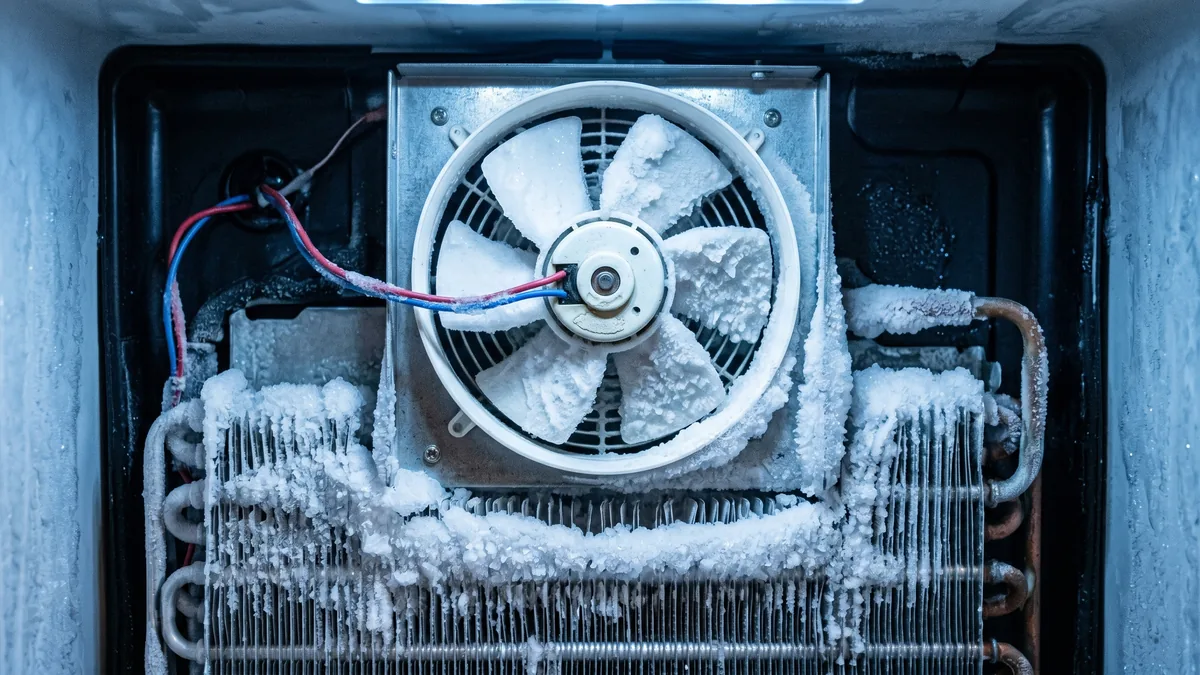
The fundamental thing most people miss: a standard top-freezer or side-by-side fridge has just one cold-air source. The main evaporator coil sits hidden behind a panel inside the freezer. The compressor pulls heat out, the coil gets ice cold, and a small fan blows that air across the coil. Some of the air stays in the freezer. The rest gets pushed up through a small duct, past an automated damper, and straight into the fridge compartment.
That single airflow path is exactly why this symptom is so common. The compressor cycle is doing its job, and the cooling air is being made. It just is not arriving in the fridge! When you open the fridge and feel warm air, but your freezer keeps food rock-solid, you are almost always looking at a blocked airflow or defrost problem. That is excellent news for your wallet because the parts involved are generally inexpensive and the labour is straightforward.
Did You Know?
French-door and bottom-freezer models follow the exact same principle. The evaporator and fan are tucked tightly behind the freezer drawer. Frost builds up there too, just out of sight, which is why these layouts often come in with the exact same complaint.
Evaporator Fan Motor Failures
The single most common cause of this uneven cooling is a failed evaporator fan motor. The fan is mounted right behind the back panel of the freezer. When it stops spinning, cold air is still generated on the coil, but nothing actively moves it. The freezer compartment stays cold by pure conduction, but the fridge, which depends entirely on forced airflow, gradually warms up.
How to test it without taking the fridge apart: Open the freezer and put your ear close to the back wall. Since opening the door usually triggers a microswitch to stop the fan, depress that door switch with your finger. You should immediately hear a steady hum. Silence means the fan has stopped. Grinding or stuttering means the internal bearings are failing. Either way, replacement is a straightforward job, with parts typically averaging $60 to $150. A seasoned technician specialising in Samsung refrigerator repair or other major brands can usually swap one out in under an hour.
People Often Ask
Can I just leave the fridge running with a failed fan? Absolutely not. The compressor will run continuously, trying to bring the fridge down to its setpoint, burning massive amounts of electricity and significantly shortening the compressor’s life. A failed fan is roughly a $20-a-month penalty on your hydro bill while you wait for the repair.
Defrost System Component Failures
Every frost-free fridge utilises a defrost cycle that runs every 6 to 12 hours. A small internal heater warms the evaporator coil for about 20 minutes, melting any frost that has built up from the humid kitchen air you let in every time you open the door. The melted water drains down a small tube to a pan under the fridge, where it safely evaporates. The entire cycle is managed by either a mechanical defrost timer (in older units) or the main electronic control board.
When the defrost heater, thermostat, or control logic fails, frost stops melting and rapidly piles up on the coil. After a few weeks, the coil becomes a solid block of ice. Cold air simply cannot blow through a block of ice. So even with a perfectly healthy fan, the fridge stops receiving cold air. The diagnostic that separates this from a fan issue is visual: unplug the fridge, remove the back panel inside the freezer, and look at the coil. A failed defrost system leaves a solid block of ice covering the fins. If you own a premium brand, hiring dedicated GE appliance repair experts is the fastest way to get the defrost heater safely replaced.

Save Your Money
Before you replace any internal defrost part, ensure your exterior door gasket is sealing properly. A torn gasket actively pulls in humid kitchen air, which overloads the defrost cycle even on a perfectly healthy unit. A new gasket averages $80 to $200 installed. A new defrost heater you do not actually need costs roughly $200 to $400 plus a service call.
Stuck Fridge Air Dampers
Between the freezer and fridge sits a small motorised flap called a damper. It opens to let cold air into the fridge compartment and closes firmly when the fridge reaches its target temperature. The tiny motor that drives this damper tends to fail in two predictable ways: it sticks closed (causing a warm fridge) or it sticks open (causing the fridge to run far too cold and freeze your produce).
You can usually spot the damper by looking for a small louvred vent inside the fridge, near the top back wall. With the unit running, you should feel a distinct draft of cold air drifting from that vent. No air at all, combined with a fan you can clearly hear running in the freezer, points strongly at a damper failure. Replacement parts are approximately $80 to $220, depending on the model.
Safe DIY Troubleshooting Steps
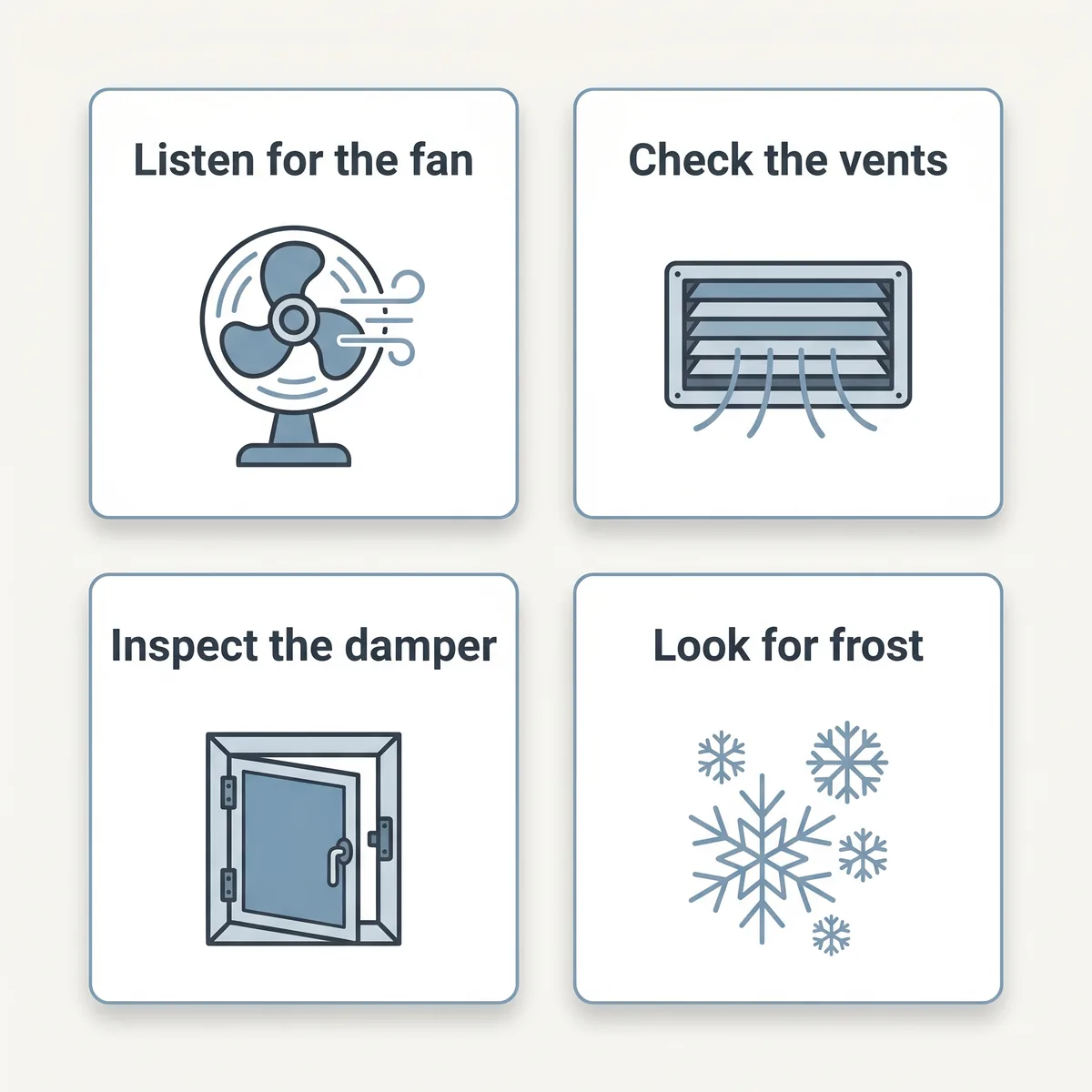
Here is the honest split. The four items below are completely safe to perform at home with the fridge fully unplugged. Anything not on this list, particularly anything involving the compressor, refrigerant lines, or the sealed evaporator coil itself, strictly requires a licensed technician.
- Confirming the temperature setpoint and re-testing internal temperatures with a standalone thermometer.
- Cleaning the condenser coils located on the back or bottom of the unit (dusty coils force the compressor to run dangerously hot).
- Executing a manual defrost: unplug the unit, prop the doors wide open, place towels on the floor, and wait 6 to 8 hours.
- Inspecting and cleaning the magnetic door gasket. Wipe out the channel and check for distinct tears.
Manitoba Climate Replacement Math
Winnipeg homes run incredibly dry for half the year and quite humid for the other half. Summer kitchen humidity, especially in older homes without dedicated dehumidification, puts immense strain on a fridge’s defrost cycle. A unit that runs flawlessly from October to April can suddenly develop a massive frost problem in July. If your cooling issues started this past summer and your unit is more than seven years old, the defrost system is the primary suspect.
For replacement decisions, the financial math has gotten noticeably better over the last few years. Pre-2015 fridges use 25% to 40% more electricity than current ENERGY STAR certified refrigerators. A typical 18-cubic-foot top-freezer running on a 2010-era platform costs an estimated $110 a year on a Manitoba Hydro residential rate. The exact same size modern ENERGY STAR model costs roughly $70. Over a 10-year secondary lifespan, that is approximately $400 saved, even before factoring in local Manitoba Hydro rebate programs.
Our rule of thumb when diagnosing issues like fixing refrigerators: if the diagnostic points to a fan, damper, or simple thermostat under $400 all-in, the repair makes immediate sense on any fridge under 12 years old. If the diagnosis uncovers a sealed-system failure or a main control board averaging $500+ on a unit older than eight years, the replacement math usually wins.
Professional Tip
If you decide to replace, do not banish the old fridge to the garage to act as a beverage cooler. A 2008-vintage fridge running 24/7 in a sweltering Winnipeg garage will cost you significantly more in hydro every year than the drinks are actually worth.
Download the Diagnostic Checklist (PDF)
Frequently Asked Troubleshooting Questions
How long should I wait before assuming my fridge is broken?
Give it a full four hours after closing the door, utilising a glass of water and a thermometer resting on the middle shelf. If the water still sits above 5°C (41°F) after that wait, something is wrong. Brand-new fridges take 24 hours to fully cool from room temperature, but an older fridge that was working yesterday and is warm today is not in a normal cool-down cycle.
Can I fix a fridge with a frosted-over coil myself?
You can safely perform the visual diagnostic and the manual defrost. Unplug the unit, prop the doors open with a fan blowing directly into the freezer compartment for 6 to 8 hours, then plug it back in. If the fridge cools normally for a few days but the frost eventually returns, the defrost system itself has officially failed. Replacing the physical heater or control board is straightforward for a technician but requires reading wiring diagrams, meaning most homeowners safely stop at the manual defrost phase.
Why is the freezer working if both sections share the same compressor?
Most household fridges have one single cold-air source: the evaporator coil located solely in the freezer. Cold air is then pushed up to the main fridge compartment by a small evaporator fan, travelling through a duct controlled by a damper. If the fan dies or the damper sticks shut, the freezer safely keeps its own cold air while the fridge slowly warms up.
Is it actually worth fixing a 10-year-old fridge?
It entirely depends on which component failed. A fan motor or damper assembly is an average $150 to $350 repair on a fridge that may still have years of life left. Conversely, a failed compressor or a sealed-system leak on a 10-year-old unit is approximately a $700 to $1,200 job. At that price, the math strongly points toward purchasing a highly efficient modern replacement.
