
If your washer roars, bangs, or grinds only when it hits high speed, you are hearing one of a handful of problems: an unbalanced load, worn drum bearings, a bad tub shock or suspension spring, a failing drive motor, or something small and hard trapped where it should not be. A Samsung washer loud spin cycle follows the same rules as any other brand does, so the noise itself tells you a lot. When the sound points to a worn part rather than a lopsided load, our washing machine repair services in Winnipeg can pin it down fast.
The trick is matching the sound to the cause. A rhythmic bang is not the same as a steady grind, and a high-pitched squeal points somewhere different again. Here is how to read the noise, what is safe to check, and when the spin cycle is telling you a bearing is on its way out.
In This Article
Read the Noise Before You Open Anything
Your washer is loudest at spin because that is when the drum hits its highest speed, sometimes over 1,000 rpm on a front-loader. Any imbalance or worn part gets amplified. Before you assume the worst, listen carefully, because the type of sound is the fastest way to guess the cause.
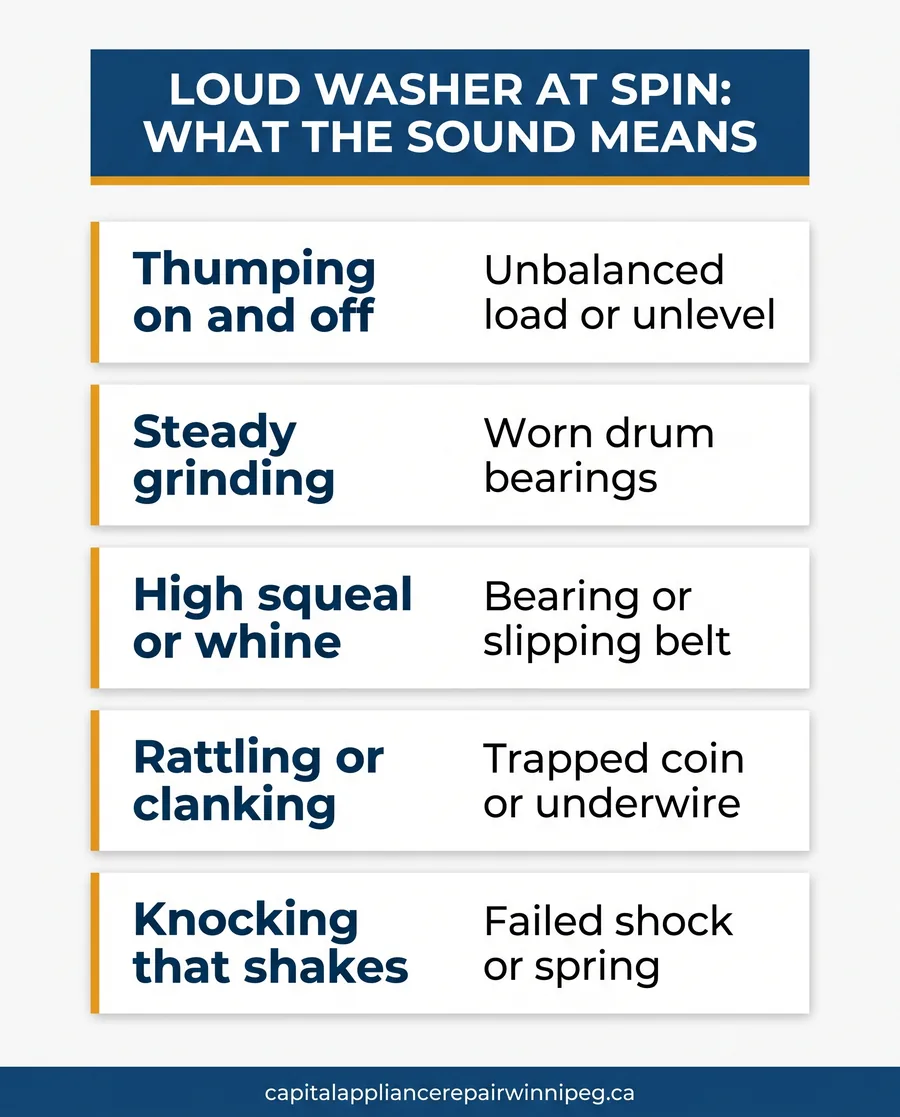
- A Rhythmic Thump or Bang That Comes and Goes: Almost always an unbalanced load or a machine that is not level.
- A Steady Grinding or Rumbling That Gets Louder Over Weeks: Worn drum or tub bearings, the most common real repair.
- A High-Pitched Squeal or Whine at Speed: A worn bearing, a slipping belt, or a drive motor issue.
- A Hard Rattling or Clanking: A coin, underwire, or button trapped in the drum, pump, or between the tub and basket.
- A Knocking That Shakes the Whole Machine: A failed tub shock absorber or a broken suspension spring.
Quick Take
A washer that gets louder at spin is not always failing. Start by re-leveling it and splitting a heavy load in half. If the noise survives a balanced, level test spin, you are likely looking at bearings, shocks, or a trapped object.
Causes and Fixes at a Glance
Here is the quick reference. Match the sound in the left column to the likely cause, then see whether it is a safe homeowner check or a job for a technician. Ranges are typical Winnipeg figures for planning, not a quote.
| What You Hear | Likely Cause | DIY or Technician? | Typical Repair Cost |
|---|---|---|---|
| Thumping that comes and goes | Unbalanced load or unlevel machine | DIY | $0 |
| Steady grinding or rumbling | Worn drum or tub bearings | Technician | $250 to $450 |
| High squeal or whine at speed | Worn bearing or slipping belt | Technician | $180 to $400 |
| Rattling or clanking | Trapped coin, button, or underwire | Often DIY | $0 to $150 |
| Knocking that shakes the unit | Failed shock absorber or spring | Technician | $200 to $380 |
Pricing note: These are typical 2026 Winnipeg ranges for the repair itself and vary by brand, model, and part cost. Front-load bearing jobs sit at the higher end because the tub often has to come apart. Treat these as planning figures and ask for a written estimate before any parts are ordered.
Save Your Money
Before booking anything, run one empty spin cycle with the machine relevelled. Roughly a third of the loud-spin calls we get turn out to be an unbalanced load or a washer that walked out of level. That test costs nothing and can save you a service visit.
When It Is the Drum Bearings
Of every noise on the list, worn bearings are the one people most often ignore until it gets expensive. The bearings let the inner drum spin smoothly. As they wear, you get a low grinding or rumbling that starts quietly and grows louder over a few weeks, always worst at high spin. Left alone, a failing bearing can let the drum wobble enough to chew up the seal and the tub, turning a moderate repair into a much bigger one.
A quick test: with the machine off and empty, grab the drum at the top and try to rock it. A little give is normal. If it shifts a lot or you feel grinding as it turns, the bearings are worn. This is not a beginner repair. On many front-load and Samsung units the tub has to be split open, which is why it lands squarely in technician territory.
Red Flag: Do Not Keep Running It
If the washer is grinding hard, leaking rusty water, or walking across the floor at spin, stop using it. Running a machine on failed bearings can crack the tub, damage the motor, or throw the drum off its mount. A repair that would have been a few hundred dollars can become a replacement. Unplug it and book service before the next load.
Front-Load and Top-Load Washers Differ
The loud-spin causes overlap, but the odds shift with the design. Front-loaders and many Samsung and LG high-efficiency top-loaders spin faster and rely on shock absorbers and a spider arm, so bearing and shock wear is common. Older top-loaders with an agitator are more likely to make noise from a worn tub bearing, a bad clutch, or a coin stuck in the pump.
Where the machine sits matters too. A Winnipeg basement laundry on an uneven concrete floor throws a fast spin off balance more easily than a main-floor install, and the sound carries through the joists so it seems worse than it is. If your washer only got loud after you moved it, start with levelling and the shipping bolts before you suspect a part. If it also struggles to drain or spin out, it is worth knowing what to check when your washer stops spinning, which often points back to why your washing machine is not spinning properly.
Did You Know?
Front-load washers ship with transit or shipping bolts that lock the drum for moving. If those bolts were never removed after delivery, or reinstalled for a move and forgotten, the machine will be violently loud at spin. It is worth ruling out before anything else on a newer or recently moved unit.
Safe Checks You Can Do First
The checks below are limited to safe, no-disassembly steps: levelling, balancing a load, and clearing accessible debris. Do not open the tub, remove the drum, or work on the motor, belt, or wiring yourself. Always unplug the washer before reaching into the drum or the filter. If the noise points to bearings, shocks, or the motor, stop and call a qualified technician. Capital Appliance Repair is not responsible for injury or damage from work attempted based on this article.
- Unplug the Washer: Do this before you reach into the drum, the filter, or anywhere near moving parts.
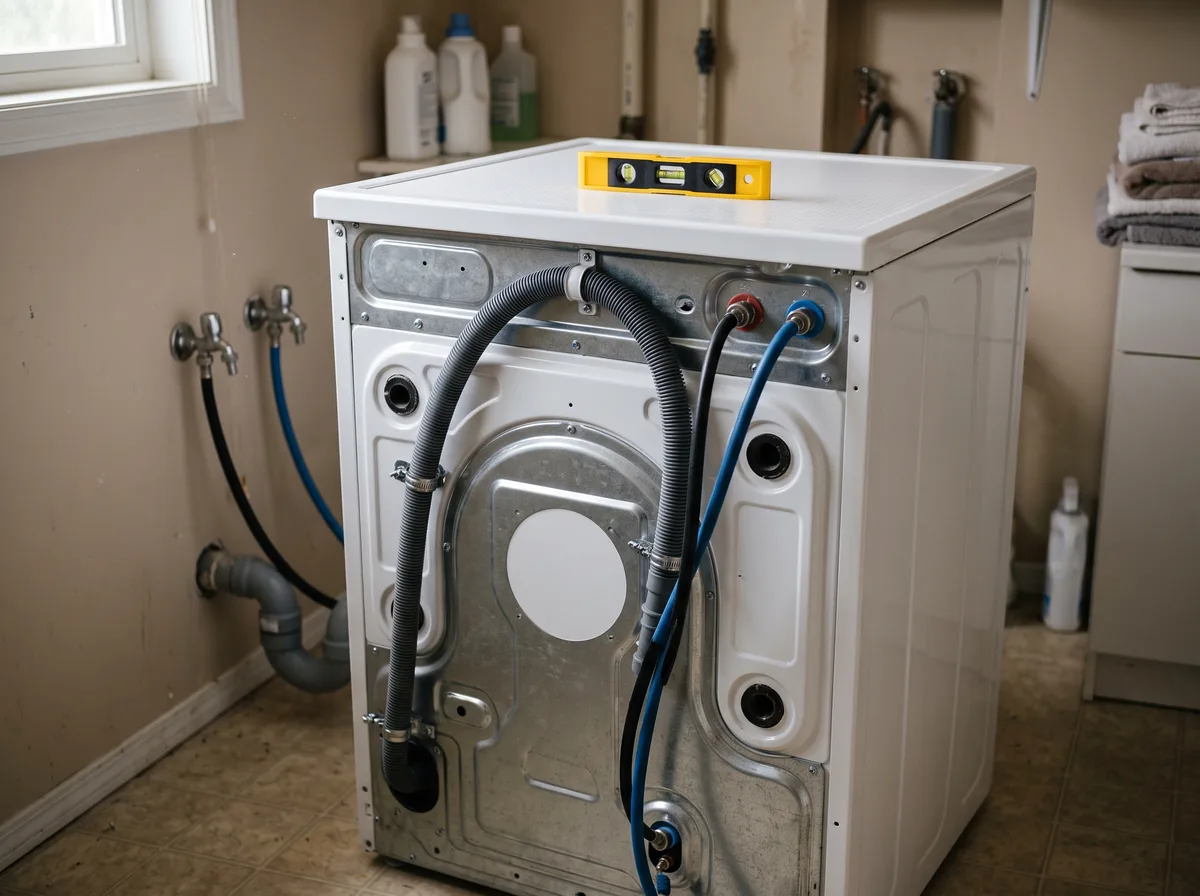
- Check the Level: Set a level on top, front to back and side to side, and adjust the feet until it does not rock.
- Rule Out Shipping Bolts: On a front-loader, confirm the transit bolts at the back were removed after delivery or a move.
- Balance the Load: Take out a heavy, tangled load and redistribute it, or split it in half. Wet towels bunched on one side are a classic cause.
- Feel for a Wobbly Drum: With the machine empty and off, rock the drum by hand. Lots of play or grinding means bearings.
- Check the Filter and Drum for Objects: Unplug, open the front pump filter (put a towel down, it holds water), and feel around the drum edge for coins or wire.
- Run an Empty Test Spin: Level, balanced, and clear, then listen. If it is still loud, the cause is internal and needs a technician.
Pro Tip
Record a short video with sound of the washer during spin on your phone. Playing that clip for a technician often narrows the diagnosis before anyone opens the machine, which can shorten the visit and the bill.
“My Samsung front-loader sounded like a jet engine on spin. I was sure it was dying. Turned out a bra underwire had worked its way between the drums. Fished it out and it went back to normal.”
— r/appliancerepair homeowner, 2023
When to Stop and Call a Technician
If the machine passes a level, balanced, debris-free test spin and is still loud, the cause is inside, and it is time for a pro. Grinding bearings, a knocking shock absorber, a squealing belt, and a failing drive motor all need the tub or cabinet opened, the right parts, and torque specs you do not want to guess at. On a Samsung or other front-load unit, a bearing job in particular is best left to someone who does it regularly.
There is also an economics question on an older machine. If your washer is well past a decade old and needs a bearing or motor, replacing it may cost less over time. A current high-efficiency model uses far less water and power, and the ENERGY STAR clothes washer guidelines along with the ENERGY STAR Canada program show the running-cost difference. And if your laundry room struggles extend further, like why your dryer is not heating up, a technician can address both issues during a single visit. For most machines under ten years old, though, a repair is the smarter call.
People Often Ask: Is It Safe to Keep Using a Loud Washer?
For a one-off unbalanced load, yes, once you rebalance it. For a machine that grinds, knocks, or leaks at spin, no. Running it on worn bearings or a broken shock can wreck the tub, seal, and motor and turn a repair into a replacement. When in doubt, stop the load and get it looked at.
Download the Free Quick Guide
A one-page guide to reading your washer’s spin-cycle noise and knowing which checks are safe to try.
Frequently Asked Questions
Still hearing that grind or bang after a level, balanced test spin? Whether you need specialized Samsung appliance repair in Winnipeg, or service across Stonewall, Lorette, East Saint Paul, or throughout the Winnipeg area, we diagnose and repair noisy washers of all makes and models. Book a repair visit, and we will find the source of the noise before it damages the rest of the machine.
